
Business Plateaus
Break Business Growth Plateaus with Software
As businesses grow, the systems that once supported success often become the very obstacles preventing the next stage of growth. Manual processes, disconnected applications, duplicate data entry, and aging software create hidden costs that reduce productivity, increase risk, and limit profitability.
Houston Computer Consulting helps organizations identify and eliminate these constraints through custom software development, systems integration, workflow automation, reporting modernization, and technology strategy. The goal is simple: enable sustainable revenue growth without proportional increases in overhead.
The companies that scale most successfully are not necessarily the ones with the largest budgets, but the ones whose technology evolves before operational bottlenecks begin limiting growth.
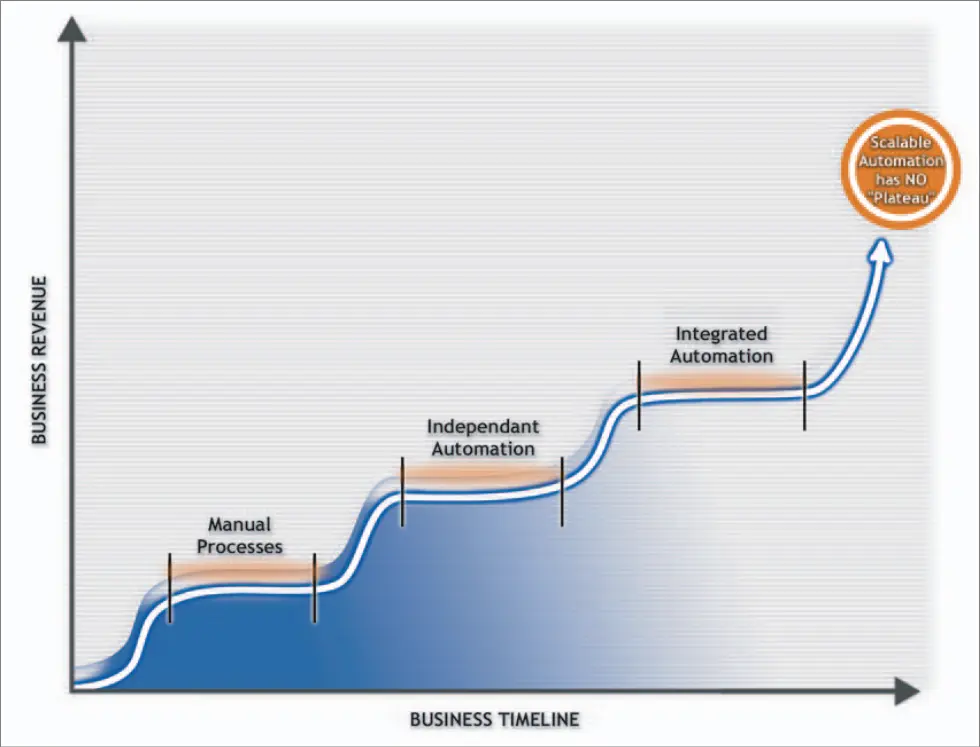
Signs Your Business Has Reached a Technology Plateau
Many organizations do not recognize a technology plateau until growth slows, margins shrink, or customer service begins to suffer. Common indicators include:
- Employees repeatedly enter the same data into multiple systems.
- Critical reports require manual compilation or spreadsheet manipulation.
- Growth requires hiring staff faster than revenue is increasing.
- Customers experience delays caused by internal workflows.
- Leadership lacks timely operational, financial, or performance visibility.
- Existing software cannot adapt quickly to new opportunities or business requirements.
- Departments rely on disconnected software tools and workarounds.
- Technology maintenance consumes resources that could be invested in growth initiatives.
If these challenges sound familiar, your business may be losing revenue, productivity, and competitive advantage because of technology limitations rather than market conditions.
Business Benefits of Modernization
- Reduced labor costs through workflow automation.
- Improved data accuracy and operational visibility.
- Faster customer response times and service delivery.
- More efficient scaling without proportional staffing increases.
- Better decision-making through integrated reporting and analytics.
- Lower long-term technology risk and maintenance costs.
How We Help
We work with growing businesses to identify operational bottlenecks, modernize critical systems, automate repetitive processes, and create technology roadmaps that support long-term growth.
Our services include custom software development, web application development, systems integration, workflow automation, cloud modernization, database development, reporting solutions, and strategic IT consulting.
Every recommendation is aligned with measurable business objectives such as increased productivity, improved customer experience, reduced operating costs, and higher profitability.